
RETAINING WALLS · WEST SIDE CINCINNATI
Retaining Walls Built to Hold Cincinnati Hillsides
A wall on the west side has a job to do. It holds the slope and keeps water moving, so the yard above it stays put and the yard below it stays usable. We design, build and repair retaining walls on Cincinnati hillsides from our shop in Sayler Park, minutes from most of the slopes we work on.
Five-star rated by west-side neighbors Licensed & insured Workers comp coverage
WALLS WE BUILD
What Kind of Retaining Wall Does Your Slope Need?
The right wall depends on how tall it has to be, what it holds back and how you want it to look. We build two kinds, and we will tell you which one fits your yard after we see the slope.
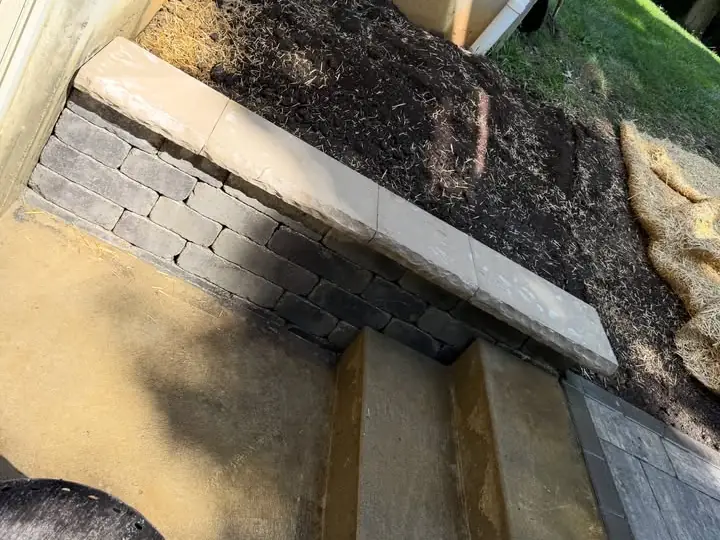
Segmental Block Walls
Interlocking concrete block made for structural work. It handles height, curves and steps, which makes it the usual answer for a slope that needs real holding power.
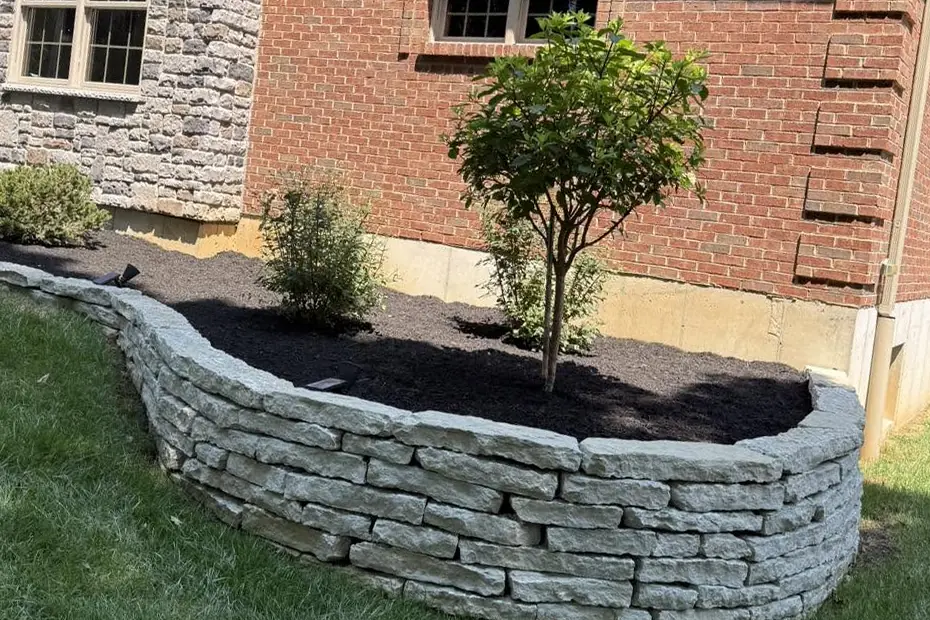
Natural Stone Walls
Stacked stone for a wall that should look like it has always been there. A good fit for garden walls and front-yard grade changes, where the wall is part of the view.
Walls are one part of our hardscaping work, alongside patios, walkways and drainage. See more finished work in our project gallery.
HOW WE BUILD
How Do We Build a Retaining Wall That Holds?
A retaining wall fails from behind and below, almost never from the front. So that is where we put the work.
Water is the reason. Soil on these hillsides holds rain, and wet soil is heavy. In winter that trapped water freezes and pushes harder. A wall with no way to drain fights that pressure every season until it leans.
- BaseWe dig below grade and compact a gravel base, so the first course sits level on ground that will not settle.
- DrainageA drain pipe and clean gravel backfill run behind the wall, so water leaves instead of building pressure.
- ReinforcementTaller walls get geogrid layered back into the slope, which ties the wall and the soil behind it together.
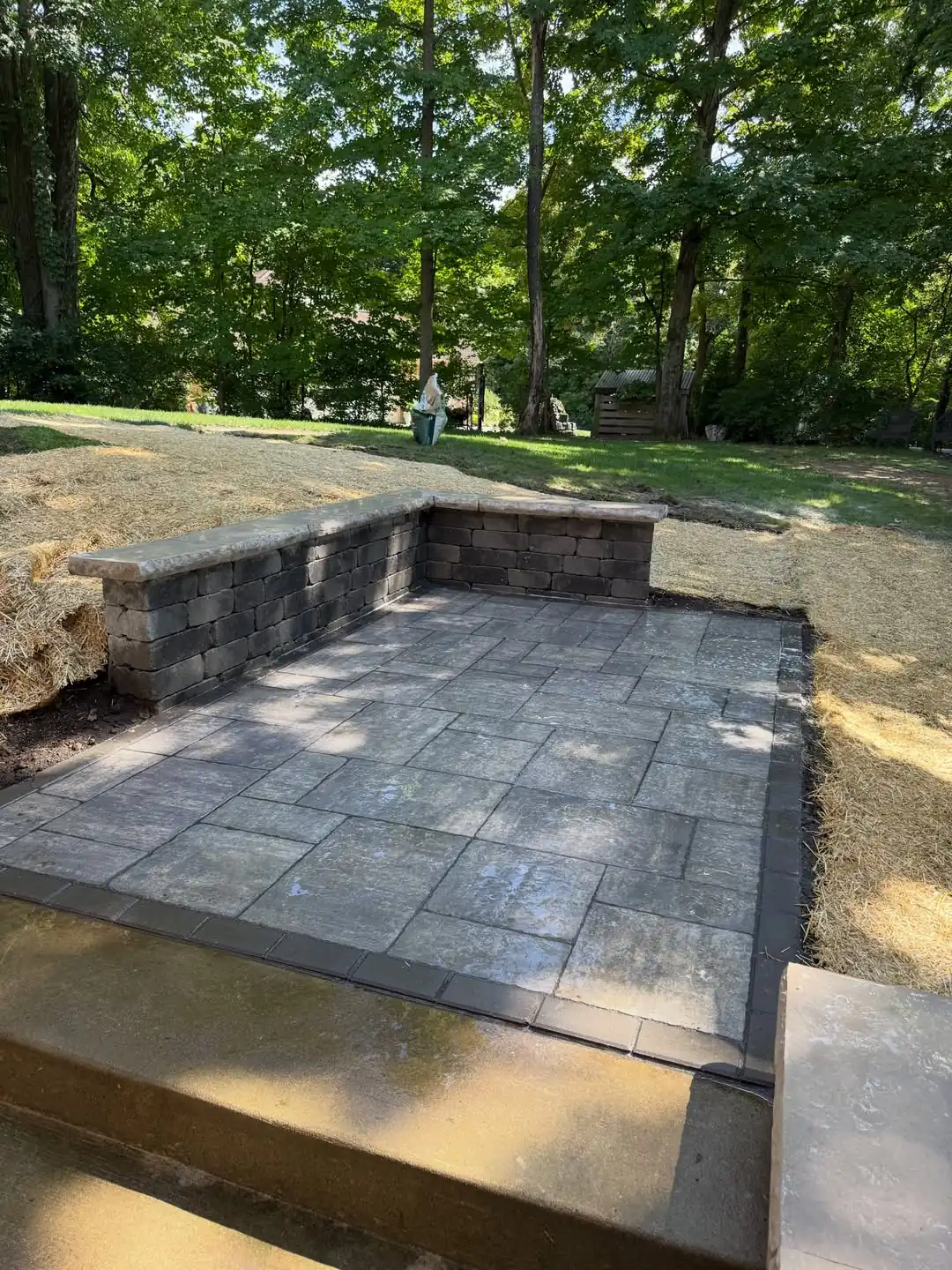 4 Feet
The usual height where a wall needs a permit and engineered drawings
REVIEWED BY YOUR NEIGHBORS
What It Is Like to Work With Us
Neighborhood Favorite, Nextdoor 2024 & 2025 Best Landscaping Crew, Cincinnati Magazine 2024 & 2025
A wall is a decision you research for weeks, so how a contractor answers questions matters as much as how they stack block. These neighbors hired us for other projects. We share their words for what they say about working with our crew.
“Used for a water future and the communication was amazing, Johnny didn’t seem rushed when answering questions for us and made sure we were educated on all of our decisions for our project! Highly recommend”Alan A.
“Great work, reasonably priced and got the job done in a timely fashion. Communication was great, I could tell Johnny was knowledgeable when answering any questions I had. I highly recommend Priority Lawn and Landscape!”Jordyn G.
“Johnny and his crew showed up when they said they would, and did a great job at an affordable price!”Douglas H.
WALL REPAIR AND REPLACEMENT
Is Your Retaining Wall Leaning, Cracking or Bulging?
Those are signs the wall is losing to the pressure behind it, and they do not get better on their own. Every wet season and every freeze moves it a little further.
- Leaning A wall tipping downhill is being pushed by soil and water it cannot drain.
- Cracking Stair-step cracks and gaps between blocks usually point to a base that has settled.
- Bulging A belly in the middle of the wall is pressure building behind one section.
- Rotting Timber Old tie walls rot from the back, where you cannot see it until the face starts to move.
Not every failing wall has to come down. Sometimes one section can be rebuilt and the drainage corrected. Sometimes the honest answer is a new wall. We will tell you which one you have after we see it, and why.
If your wall moved after a heavy rain, do not wait on a form. Call (513) 430-6114.
RECENT WORK
Recent Retaining Walls on Cincinnati Hillsides
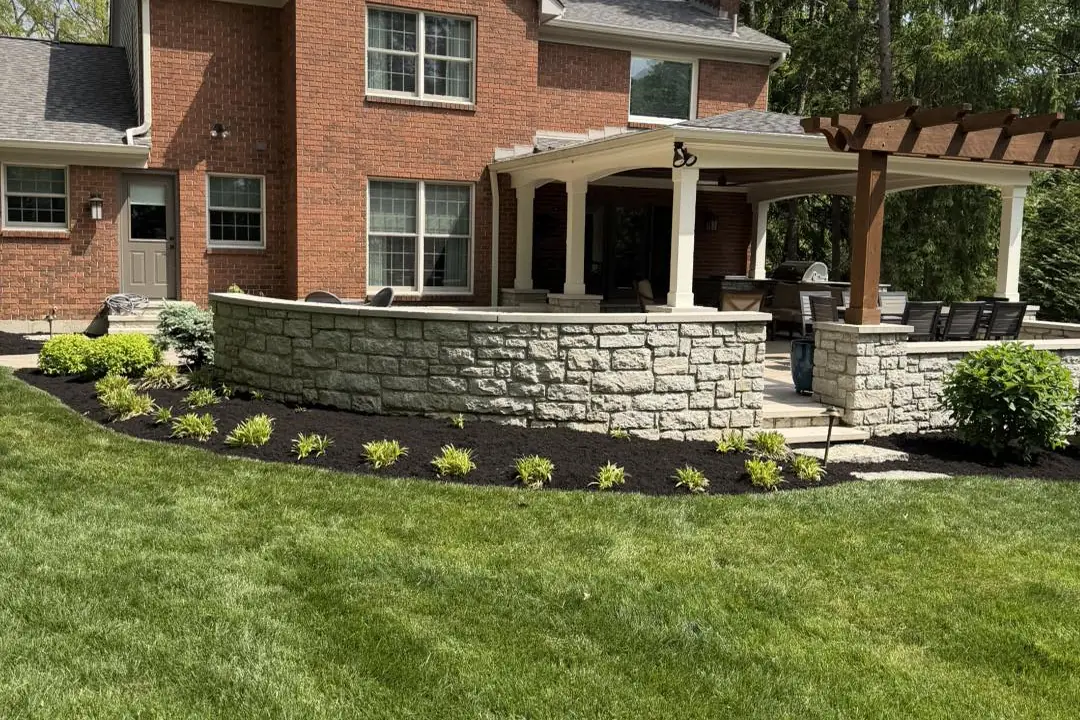
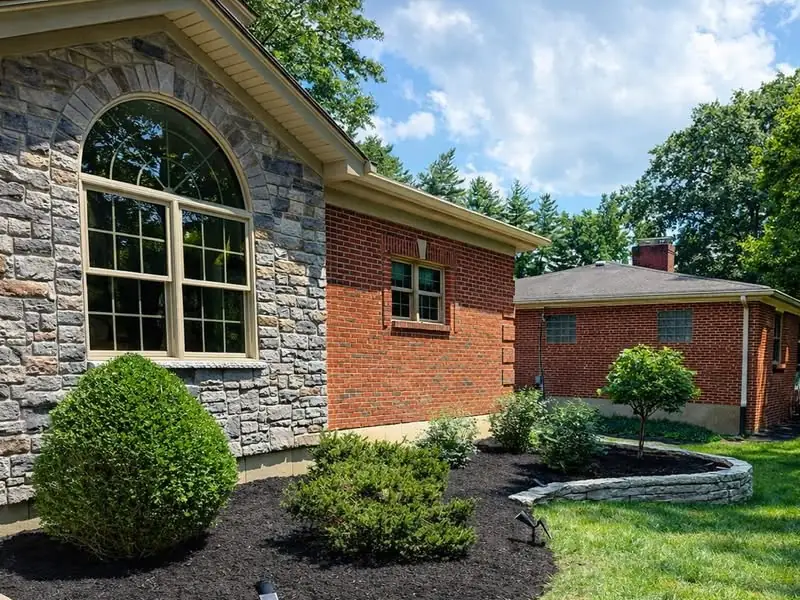
Every wall starts with the slope behind it. Here is what that looks like finished.
WHERE WE WORK
Serving Cincinnati’s West Side
Our shop and yard sit on Gracely Drive in Sayler Park, so most of our work is a short drive rather than a highway trip. That is why we can get back out to a job the same week instead of the next month.
COMMON QUESTIONS
Retaining Wall Questions We Hear Most
What does a retaining wall cost on Cincinnati’s west side?
Most of our wall projects start around $3,000. Height and length set the baseline, and three things move the number from there: how easily we can get equipment to the wall, how much soil it holds back and the material you choose. We price every wall after walking the property, and the quote is free.
Do I need a permit to build a retaining wall?
Usually not for a wall under four feet that is not holding a load above it, such as a driveway or a structure. Taller walls and walls carrying a load generally need a permit and engineered drawings. Rules vary by township, so we check with your jurisdiction before work starts and coordinate the engineering and permit as part of the project.
How long does it take to build a retaining wall?
Most walls take two to three days. Longer or taller walls, tight access and wet weather add time. Your quote includes a schedule, so you know what the yard looks like on each day of the build.
Can a leaning retaining wall be repaired, or does it need to be replaced?
It depends on why it is leaning. If the base is sound and the problem is one section or poor drainage, a repair can work. If the whole wall went up without a proper base or drainage, rebuilding is the fix that lasts. We look at the wall, tell you which one you have and explain why.
Why do retaining walls fail?
Water. Soil behind a wall holds rain, and without a drain pipe and gravel backfill that water has nowhere to go. It adds weight, and in winter it freezes and expands. Over a few seasons the pressure tips the wall forward. A shallow or poorly compacted base is the other usual cause.
Which retaining wall material is best for a hillside?
For a wall doing structural work on a slope, segmental block is usually the answer, because the blocks interlock and work with geogrid reinforcement. Natural stone and boulders suit shorter walls and gentler grades, where looks carry more weight. We build all three and recommend based on the slope.
FREE ON-SITE QUOTE
Tell Us About Your Project
Walls, patios, drainage or weekly care. Send a few details and photos if you have them, and we will come look at the ground it sits on.
You send the details
Two minutes. Photos help most on walls and drainage.
We call within one business day
A real conversation about what you want, not a form letter.
We walk the property with you
On site, no charge, no pressure. You get a written quote after.
Would rather talk it through?
(513) 430-6114